วันอังคารที่ 27 กรกฎาคม พ.ศ. 2553

Cleaning a Wheelchair

Cleaning a Wheelchair


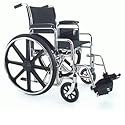
Everyday use of a wheelchair can cause it to become dirty and grimy. Medical conditions, incontinence, and illness can cause other material to need to be cleaned off the wheel chair. Cleaning a new or used wheelchair properly will be worth the time and effort.

BASIC CLEANING OF A WHEELCHAIR

Everyday use can cause the build up of dirt and grime on a wheelchair. Regularly wiping down the wheelchair will prevent build up. It can be done daily or every few days depending on the amount of use. Simply wiping down the wheelchair will keep it clean and prevent buildup from affecting function. Build up can affect the efficiency of the wheels and also of the breaks.

WHEELCHAIR WHEEL CLEANING

The tires on a wheelchair can become very dirty easily if the wheelchair is used outdoors.

Even inside, the tires can become dirty. The same cleaner that is used on bicycle tires and car tires works on wheelchair tires. There are even wheel covers to prevent the dirt from outside being transferred inside. Some people even have two wheelchairs, one for inside and one for outside so that carpeting and flooring inside doesn't get dirty. Not everyone can afford that, so the wheels are often wiped down before the chair comes in the house. Use cleaners that won't leave a residue that can stain indoor flooring. Another advantage to having clean wheelchair wheels is that the dirt on the tires won't get on the hands of the user who pushes themselves.

WHEELCHAIR CUSHION CLEANING

Even if there are no problems with incontinence and leaking of adult diapers, wheelchair cushions can have an odor after awhile. It may just be from sweating or from spills, but eventually a seat cushion that is not cleaned regularly will acquire an odor. Even waterproof cushions can absorb moisture or liquids, which can result in odor. Usually cleaning a cushion as soon as the user goes to bed will allow enough time for the cushion to dry after cleaning. In the case that it isn't, an alternative cushion or pillow will work as a temporary cushion for the wheelchair user. Cleaning with vinegar or baking soda is an effective way to clean. A cleaner for pet accidents also works well. Bleach can damage material and cause bleach stains, so use caution. Be sure all of the cleaner is rinsed off to avoid irritation of the skin when the person is able to have their cushion back on their chair.

SPILLS ON WHEELCHAIRS

Most spills on wheelchairs can be wiped off quickly with no residue left behind. Some spills like milk can quickly be the cause of odor on a wheelchair. The faster the spill is wiped up, the less time it has to soak in and become a problem. To avoid spills on wheelchairs, if the person is going to eat while sitting in a wheelchair, have them pushed close to a table. Clothes protectors (aka bibs) are often large enough to drape over the wheelchair. Plastic or towels can be over put over the exposed wheelchair parts, also.

WHEELCHAIR BRAKES OR LOCKS

For the wheel chair brakes or locks they should be kept free of debris and to prevent a loose fit when the chair is locked. Wiping regularly will prevent that.

ELECTRIC WHEELCHAIRS

It is important to follow the manufacturer's directions and avoid water or other fluids to come in contact with electrical parts. This could void the warranty and also be a safety hazard. The non-electrical parts can be wiped down and cleaned regularly. Be sure cleaner doesn't drip onto electrical parts.

Wheelchairs last longer when kept clean and in good repair. When cleaning and repair just isn't working for a wheelchair, it may be time for a new wheelchair. For wheelchair purchases, rentals, and repairs when you are in the Miami, Florida area, contact Medical Equipment Solutions.
Shopping Cart
WHEELCHAIR

Family Friendly Vacationing - Tips for Traveling with Baby

Family Friendly Vacationing - Tips for Traveling with Baby


Family vacations are a great way to bond with your loved ones, but when a baby is involved it can also be a little difficult. Taking a baby away from their familiar surroundings and everyday routines can wreak havoc on their emotional state. Often times parents feel that should by pass the vacations and stay home just to avoid the baby breakdowns that may occur. There is no reason to bring your life to a complete stop and forego family vacations. With these great tips you can take your baby on vacation and still have a great time.

  • Create a Road Read Routine: Infants are indeed creatures of habit and any major or minor change to their daily schedule can make them, and therefore you, miserable. It's impossible to keep an identical routine while you're on the road, but you can do a few things to help them adjust. Create a daily trip routine and try your best to stick with it. The more predictable their day is the happier they are. Allowing them eat, play, and sleep according to a schedule will calm their fears and anxieties.
  • Keep Nursing: Many mothers feel they should stop nursing when they go on vacation. This can be one of the worse things you can do before vacation. If your baby is still nursing before you go on vacation, changing over to strictly bottle feeding can be very emotionally taxing on them. It's better to allow them the comfort of breast feeding to help calm their vacation anxiety. It may be a good idea to introduce a bottle into your feeding routine so while you're on vacation you can feed them when they demand it and save the breast feeding for dire situations or when you're in your hotel room.
  • Travel Time: The best time to leave is at the beginning of your child's sleep cycle. Leaving in the evening or before you baby takes his or her daily nap will give you a few hours of uninterrupted driving time. If it's at all possibly avoid leaving as soon as they wake up or midway through their sleep cycle. Avoid traveling at times when they baby may be extremely cranky or just getting up. A cranky baby will create a very stressful drive. Don't' forget the first aid kit: It's important to carry a baby ready first aid kit should any emergency arise. Make sure to include the name and number of your pediatrician as well as the name number and local of the hospital closest to your destination.
  • Take Pit Stops: Spending hours in the car can make anyone miserable; your baby is no exception. Feel free to drive as long as possible while your baby is sleeping, but once they are away you will want to stop ever hour or so to get out of the car and let them get some fresh air. In may tack some extra time on to your trip, but ultimately keeping them happy will keep you happy.
  • Schedule Accordingly: Don't schedule long days without any breaks. Being on vacation means seeing and experiencing new and exciting things. As an adult you look forward to visiting historic sites, nature spots, and local tourists' attractions. Pre- baby vacations may have been action packed busy days spent going from one hot spot to the next, however, your little would not be happy with that. While you may be able to see all the things you want with the baby in tow, you won't be able to enjoy it if your little one is tired and cranky. Avoid a cranky baby and a miserable vacation by spreading out your activities over the entire vacation. It will also help to schedule around the baby's sleeping patterns.


Wheelchair Users and Exercise

Wheelchair Users and Exercise


Even if you use a wheelchair exercise is vital to health. Making time amongst the continual struggle of balancing one's life may be difficult but it is not impossible. Working out and balanced nutrition go hand in hand.

Many people are simply not naturally attracted towards physical exercise. For someone in a wheelchair there may be a real and understandable fear of pain. People confined to a chair are all too familiar with shoulder, neck and back strain and it's associated pain.

But the benefits must be firmly borne in mind. Structured physical activity will strengthen the core muscles, improve balance and circulation, improve the quality of sleep and help with digestion.

In addition the person will feel and look better. There will also be some relief of musculoskeletal pain, fatigue, cramps and stiffness. Aerobic work strengthens the heart and lungs and in conjunction with a diet will assist weight loss. Additional benefits are a lessening of the risk of such disabilities as diabetes, high blood pressure, heart disease and osteoporosis.

One aspect of regular exercise which cannot be over-emphasized is its importance in maintaining good emotional health. People with disabilities may (like anyone else) feel angry, depressed, frustrated and confused. Regular workouts will help to fight depression.

As one wheelchair user puts it "If you can move something you can exercise." This is not to suggest that forming new positive habits as an adult is easy.

Increasing numbers of wheelchair users are adopting exercise plans. Young people especially can see that in some instances it is possible to be in a wheelchair and have a strong, healthy body.

Before embarking on a program it is extremely important to discuss the matter with a medical doctor, physical therapist or accredited personal trainer to establish exercise restrictions and any potential medical complications

The following observations were made by people who are themselves wheelchair users. All point out that it is necessary to be highly focussed and not be discouraged.Each session should be carefully planned. This not only saves time but allows for advance decisions on which exercises are to be undertaken. They recommend always having some activities which are personally enjoyable. You can always lift weights while watching tv.

If a person has not been physically active for sometime a transitional plan to strengthen key muscle groups and increase movement range through stretching exercises is recommended. There should be a rest day between workouts and no concentration on the same muscle groups for two consecutive sessions. Aim at a minimum of three sessions a week. At the beginning of a session it is vital to warm up and stretch gently and at its end to cool down for about ten minutes.

A fitness regime needs resistance, and strength training as well as exercises which stretch the muscles. Resistance training involves working with equipment such as expandable rubber bands. These can be used for pull-downs, shoulder rotations and arm and leg extensions. Strength training involves weights and will help make practical tasks such as pushing the wheelchair, holding items and transferring in and out of a wheelchair much easier.

Once a commitment has been made to an exercise program the next question is how, where and with whom. Equipment need not be a major expense. Soup cans, water bottles, beach and volleyballs and many household items can be used while working out. Exercise bands, medicine balls and weights are not expensive to purchase.

There are a number of wheelchair exercise machines for home use such as Vitaglide as well as hand-cyclers and other cardio equipment.

Some people will be in a position to engage a personal trainer who will be able to design suitable work-outs, teach how to use the fitness equipment properly, help with transfers from gym machines and keep the client motivated.

Many gyms are unfortunately not designed with wheelchair users in mind. In the past ten years gyms aimed exclusively at clients who use wheelchairs have been springing up in the United States. Equipment in such establishments will have been specifically selected and is likely to be highly adaptable.

People who are working out on their own at home could workout to videos specifically designed for people in wheelchairs. There is a growing list of such videos often produced by medical practitioners.

Besides these forms of exercise there are organized sport for those who are competitive. Included in this category are basketball, archery, and fencing to mention a few. Then there are also many forms of wheelchair dancing.

If you don't exercise you should most certainly do so because it seems that normal wheelchair use is not by itself sufficient. Creating an exercise plan and following it will give a feeling of accomplishment and of taking responsibility for ones own body. Good luck!


Shopping Cart
WHEELCHAIR

Introducing New Baby to the Older Child

Introducing New Baby to the Older Child


Is a new baby going to make the family a quartet? Here are some pointers to make this transition as smooth as possible.

Be sure to introduce your child to the new baby before birth. Share ultrasound pictures. Get her to know the baby by patting the baby, talking to the baby and feeling the baby kick. Make a game of talking about and planning for the new sibling. When a young child doesn't see the baby, it will not threaten her territory, even though a toddler may sense that Mommy and Daddy are preoccupied with the new bulge.

Revisit your child as a baby. Share her baby album with her. Show her what she looked like when she was born, when she was nursing, coming home from the hospital, having her diapers changed, etc. If she is familiar with newborn tasks, she will be more prepared for things to come.

Prepare her verbally for baby's entrance. "Mama is going to hold the new baby all the time. New babies sit in Mama's arms all day. Babies sleep and nurse all day long. New born, tiny babies need their mommies and daddies to help them".

Make sure the child participates in the new baby festivities. She can help to plan a baby birthday party. She will enjoy helping to pick out the cake and decorations. She can help pick out special presents for the new sibling.

Make sure that your child gets a present too. It is common for family and friends to bring along a gift for the older child when visiting the new baby. In the absence of this, keep some presents hidden for your youngster when presents are lavished on the new baby. It is also a good idea to let her unwrap the baby gifts and test the new toys, such as rattles.

It has been shown that sharing Mama with the new baby is what bothers children most. Sharing is almost always a foreign concept for children under three and her Mama is her most prized "possession". Most children will not be willing to accept the concept of sharing time with the new baby. What you can do is share with your child the time spent caring for your newborn. Baby slings give you two free hands to play and physically interact with your child. Read a book while you feed baby.

Make the older child feel important. All children want to help. Give her a family job. Tell her you need her help. Be sure to praise her when she helps. She may even learn some mothering skills along the way.

Encourage your child to talk about her feelings. These may be negative or positive. Drawing pictures may help her open up. Often children feel safer drawing what they feel. Always say that her feelings are normal. Most likely your child will open up more. All human beings want to be accepted and understood.

Revisit special times often, especially with Dad. These can be outings to the playground, to the ice cream parlor, or even to the corner market. These one-on-one times are only for the older child. It helps that she gains attention from Dad when she has lost attention from Mom.

Following these general guidelines should help to make the transition to a larger family easier and more enjoyable, especially in the first few months. A new baby in the family is a joy and as parents, we must remember that the trying times will all be distant memories.